Everyone in the fitness world who has worked with seniors knows that person.
The 90-year-old who still goes for daily walks and takes weekly fitness or yoga classes.
The 80-something who can still drop into a full split.
These aren’t fictional examples.
The 90-year-olds I’m thinking of are 94, 96, and 96.
The “80-year-old” is 85 — and it’s been her holiday tradition to take the class photo in a full split. We’ll probably be adding another one to that collection in the next couple of weeks.
When you coach people 60+, you start noticing something interesting.
Most of them walk without canes or walkers.
Their movement doesn’t look much different from people half their age.
And the ones who do come in needing assistance? Over time, you watch them move from walkers → canes → no cane at all, speed-walking laps around the room.
What’s even more surreal is watching a younger adult — someone who doesn’t train regularly — jump into a class these seniors have been taking weekly… and struggle.
That’s when it clicks.
The rules don’t change with age.
The power of consistency and mobility stays the same.
When you talk to people in this age group who move exceptionally well, a clear pattern shows up.
Most of them were never “no pain, no gain” people.
They weren’t pushing to failure in their 20s, 30s, or 40s.
Some started young.
Many started later — in their 40s, 50s, even 60s.
But almost all of them followed the same principle:
A little bit here. A little bit there.
A small push one day. Ease up the next.
“If I don’t overdo it today, I can show up again tomorrow.”
This is what real active recovery looks like — not overtraining and calling it recovery, but moving just enough so you can keep moving consistently.
You also see balance in their routines.
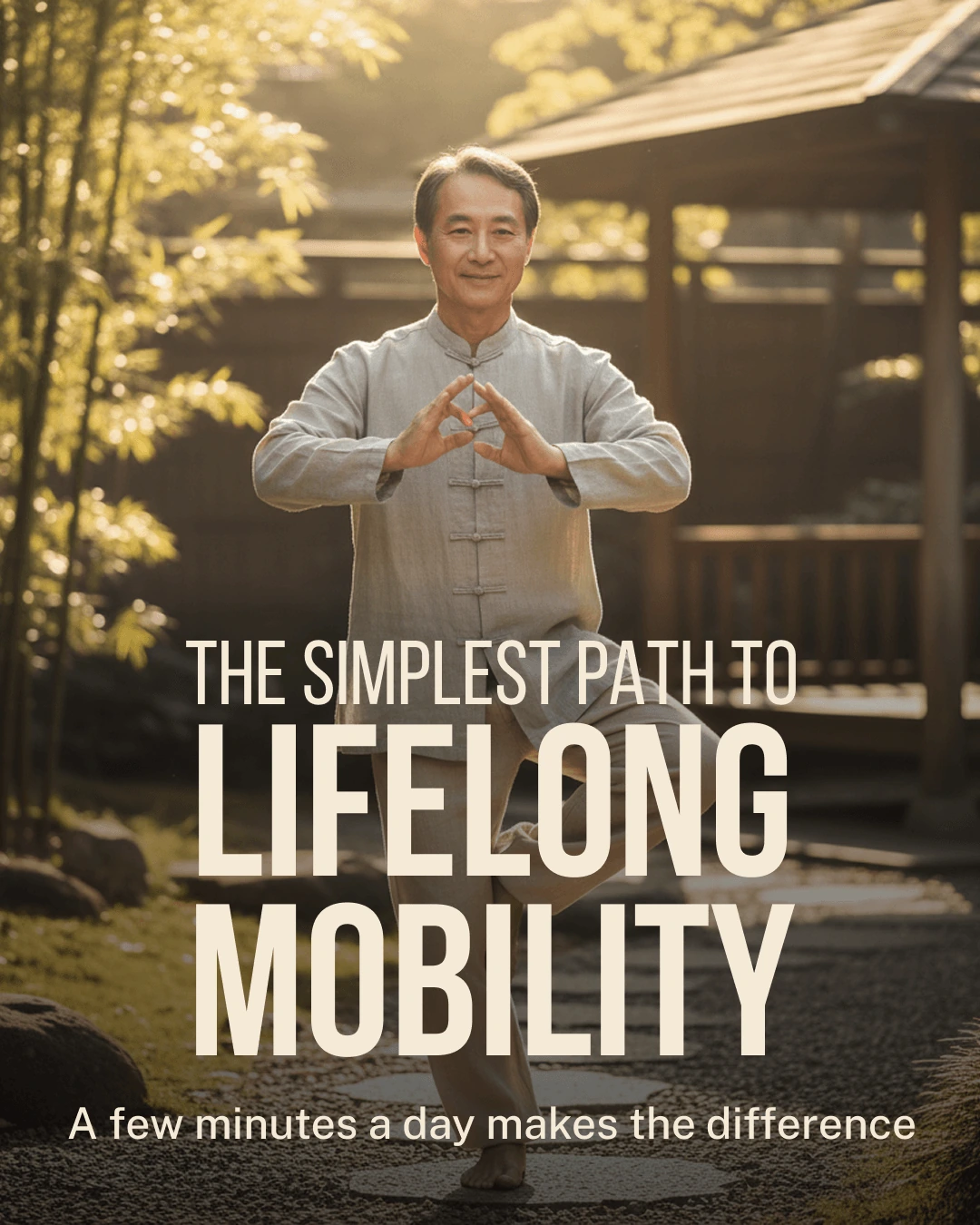
Tai Chi.
Qi Gong.
Yoga.
Pilates.
Zumba.
Line dancing.
They live by one simple idea:
You’re only as old as you can move — and it’s never too late to start.
And the truth is, if you take this approach now, you’re setting yourself up to be one of those “magic seniors” later.
Here’s a simple place to start this week:
* A 3-minute stretch you do every day
* One yoga or mobility movement for an area that bothers you — done daily for 2–3 weeks
* Learning just the first couple of movements of a Tai Chi set and repeating them consistently
As a small nudge, we unlocked a free short mobility session inside the Triomph app — something you can follow along with in under 15 minutes, no equipment, no pressure.
It’s there if you want a simple place to begin.
Small steps. Repeated often.
That’s where mobility — and longevity — are built.
Quick question:
What’s one area of your body that could move better right now if you gave it a few minutes a day?
Just hit Reply and let me know.