How to erase heavy, fatigued quad tightness
Last week, we focused directly on the popliteus and upper calf, using an inward rotational twist to unlock terminal knee extension and clear out that stubborn stiffness behind the joint.
Today, we are continuing our lower-body master directory by moving right up the leg to treat one of the most overworked zones in the entire human body: The Quadriceps.
Week 3 Protocol: The Quadriceps (The Heavy-Leg Reliever)
The Target Area: Rectus femoris, vastus medialis (VMO), and the dense superficial thigh fascia.
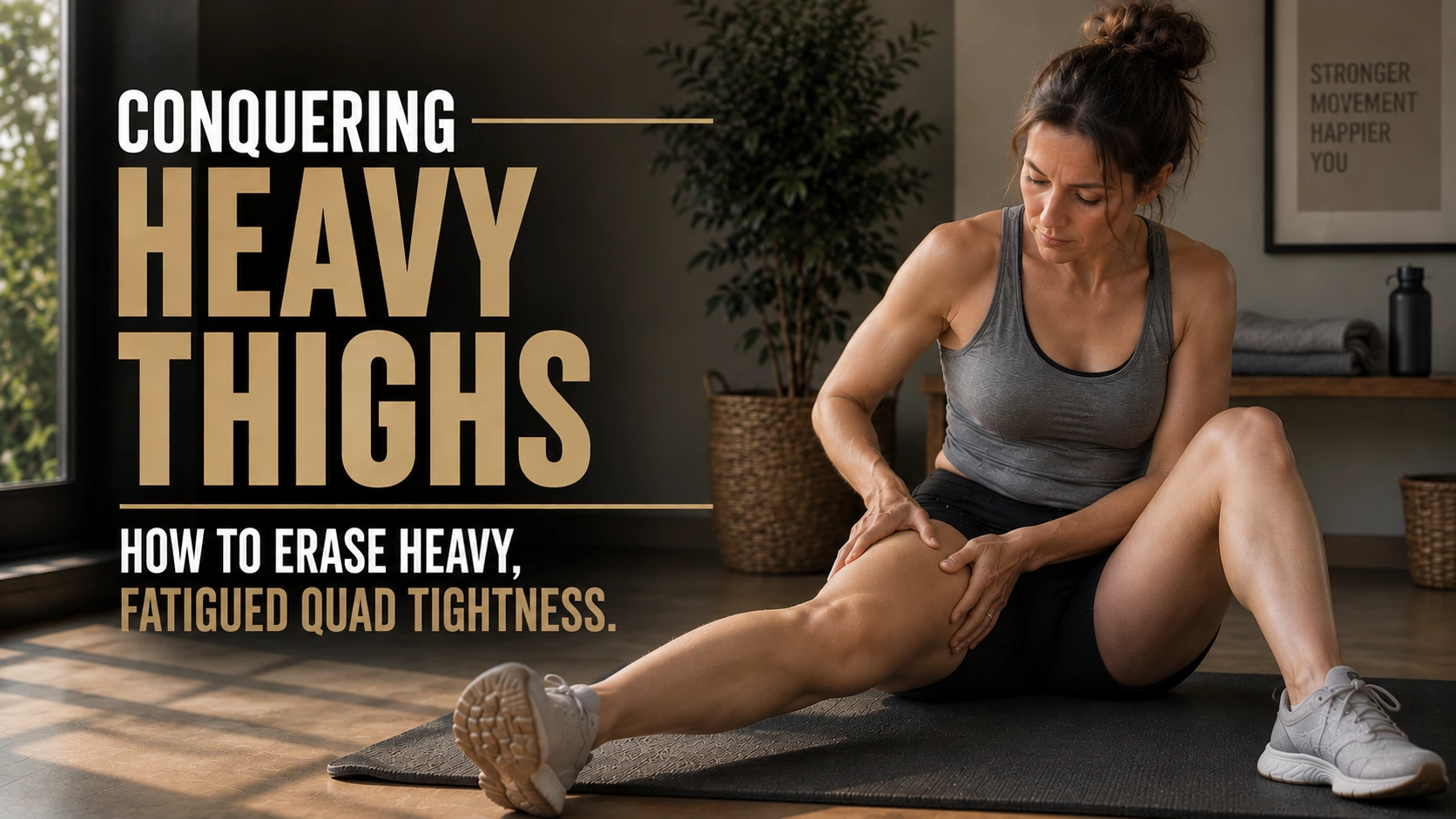
The Setup: Sit on the floor or a flat, supportive surface with your target leg extended straight out, or supported with a very slight, relaxed micro-bend under the knee.
[BLUE ARROWS = Hand Twist Direction] ──► Twist Quad Tissue DOWN & OUTWARD
[GREEN ARROWS = Active Limb Movement] ──► Melt Thigh FLAT against the floor
Step-by-Step Instructions:
Place both of your palms perfectly flat on top of your thigh muscle, about halfway between your hip crease and your kneecap.
The Wring ──►: Apply firm, downward pressure into the muscle, then twist the quad tissue downward and outward (laterally), rolling it away from your other leg.
Hold this outward tissue twist firmly while taking a slow, deep inhalation for 4 seconds.
The Active Unlock ──►: Exhale smoothly for 8 seconds. As you do, consciously allow your entire thigh muscle to melt completely flat against the floor, keeping the tissue pinned in that outward twist.
The Cues
Use the flat heels of your hands to anchor the thigh muscle. Roll the tissue down and away from your inner thigh, like you are peeling a wrapper off a roll.
During the long 8-second exhale, completely let go of any tension in your leg. Let the thigh feel incredibly heavy against the floor while the muscle tissue itself feels spacious and unzipped.
What This Does & How It Adjusts Mobility Positively
Your quad muscles bear a massive burden during daily walking, squatting, and stair climbing. Over time, the superficial fascia binding these muscles can become stuck to the inner line of the leg, leading to a heavy, constantly fatigued sensation and poor patellar tracking.
Wringing the tissue downward and outward unloads an overworked VMO and unbinds the front thigh from the inner line. It positively adjusts your mobility by freeing the kneecap to glide smoothly within its femoral groove, removing restrictive tension during deep hip flexion, and instantly erasing that concrete feeling in your thighs so you can squat and climb effortlessly.
Safety & Recovery Guidance
Frequency: Practice this safely once or twice a day, performing 4 to 5 long breathing cycles per leg.
Massage Gun Boost: Once you finish your manual wringing, use your mini massage gun on a low speed to glide gently down the center and outer portions of your thigh for 60 to 90 seconds to flush the area with fresh circulation. Avoid passing directly over the bone of the kneecap.
Test this out on your next leg day or after a long day of sitting, and notice how light your steps feel afterward! Next week, we are diving deep into the inner line of the leg to open up your hips with the adductors. See you then!
To your ultimate movement freedom,
Triomph Fitness, health and wellness
Legal & Medical Disclaimer: The information, techniques, and instructions presented in this email are for educational and informational purposes only. This content is not intended to be a substitute for professional medical advice, diagnosis, or treatment. Always seek the advice of your physician or another qualified healthcare provider with any questions you may have regarding a medical condition. Never disregard professional medical advice or delay in seeking it because of something you have read here. By participating in these exercises, you acknowledge that you do so voluntarily and at your own risk.